Copyright: © 2026 by the authors. Licensee: Pirogov University.
This article is an open access article distributed under the terms and conditions of the Creative Commons Attribution license (CC BY).

ORIGINAL RESEARCH

Can autochthonous endometrial microbiota be detected by transcervical sampling?

About authors

1 Ural State Medical University, Yekaterinburg, Russia

2 Medical Center “Garmonia”, Yekaterinburg, Russia

Correspondence should be addressed: Danila L. Zornikov
Klyuchevskaya, 17, Yekaterinburg, 620109, Russia; moc.liamg@ldvokinroz

About paper

Acknowledgments: the authors thank V. N. Khayutin, General Director of the Harmony Medical Center (Yekaterinburg), for the opportunity to conduct the study at the center.

Author contribution: Zornikov DL — conceptualization, visualization, formal analysis, writing — manuscript preparation; Simarzina VM — laboratory investigations, interpretation of laboratory results, writing — review and editing; Islamidi DK — participant enrollment, formation of clinical groups, collection of biomaterial, anamnestic and clinical data, analysis and interpretation of clinical data, writing — review and editing; Belykh NS — participant enrollment, collection of biomaterial, anamnestic and clinical data; Kornilov DO — laboratory investigations, interpretation of laboratory results, writing — review and editing; Abakumova EI — participant enrollment, collection of anamnestic and clinical data; Khayutin LV — collection of anamnestic and clinical data, writing — review and editing; Plotko EE — project administration, writing — review and editing; Voroshilina ES — supervision, study design, data analysis and interpretation, writing — review and editing.

Compliance with ethical standards: the study was approved by the Ethics Committee of Ural State Medical University (Protocol No. 1 dated January 24, 2020; Protocol No. 4 dated May 26, 2023). Informed consent was obtained from all study participants.
Received: 2026-05-28 Accepted: 2026-06-14 Published online: 2026-07-05
|
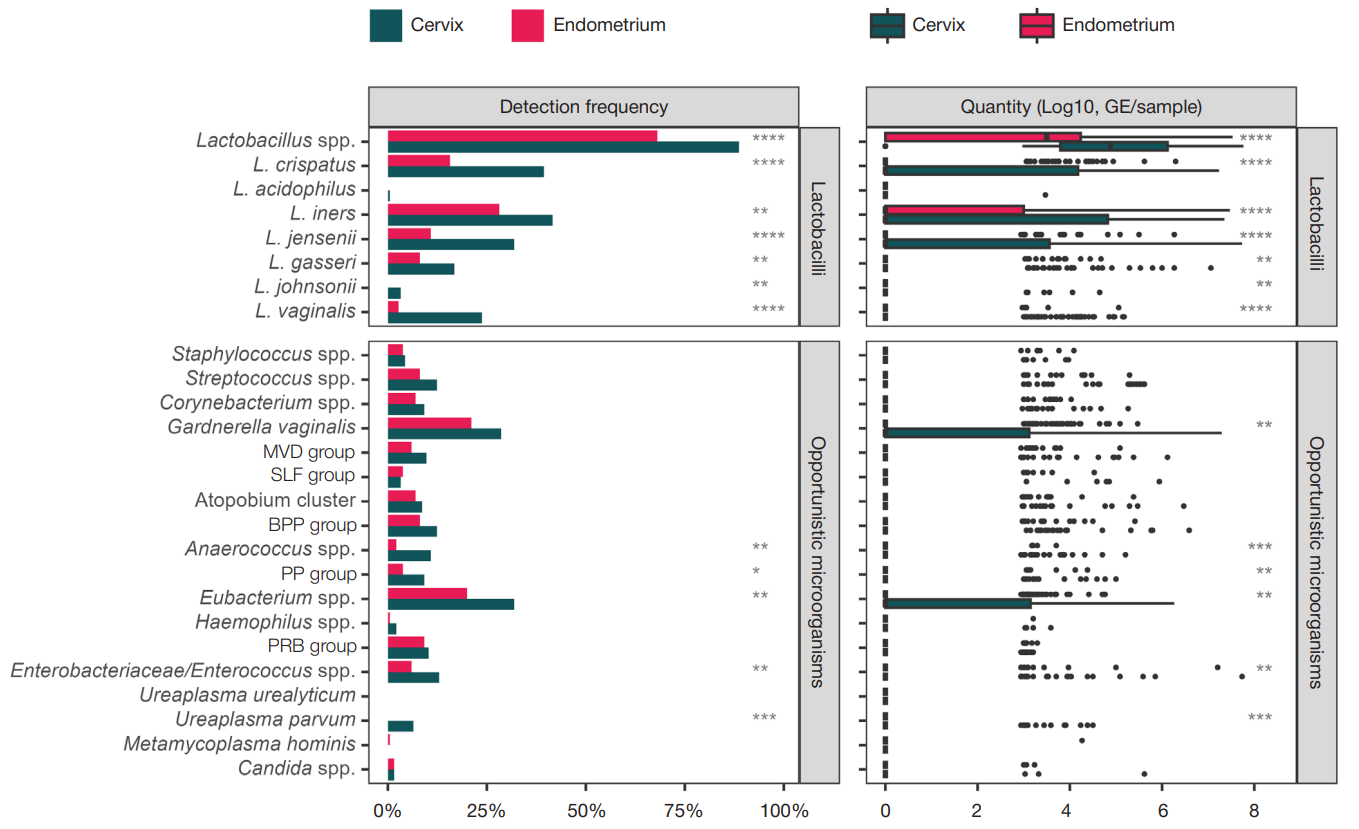
Fig. 1. Microbiota of cervical and endometrial samples. Detection frequency (left panel) and quantity (right panel) of target microbial groups. MVD — Megasphaera spp. / Veillonella spp. / Dialister spp.; SLF — Sneathia spp. / Leptotrichia spp. / Fusobacterium spp.; BPP — Bacteroides spp. / Porphyromonas spp. / Prevotella spp.; PP — Peptostreptococcus spp. / Parvimonas spp.; PRB — Pseudomonas aeruginosa / Ralstonia spp. / Burkholderia spp. Significance levels: * — p < 0.05, * * — p < 0.01, * * * — p < 0.001, * * * * — p < 0.0001
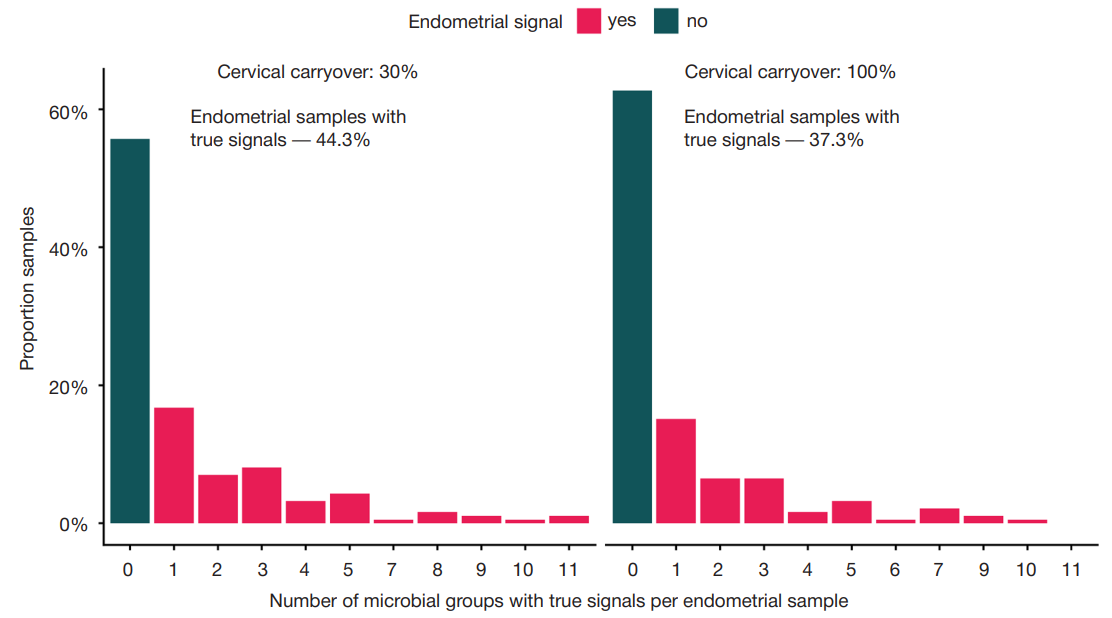
Fig. 2. Samples with endometrial microbiota after applying a 30% (left panel) and 100% (right panel) cervical DNA carryover threshold. A sample was considered to harbor endometrial microbiota if at least one target microbial group exceeded the established carryover threshold
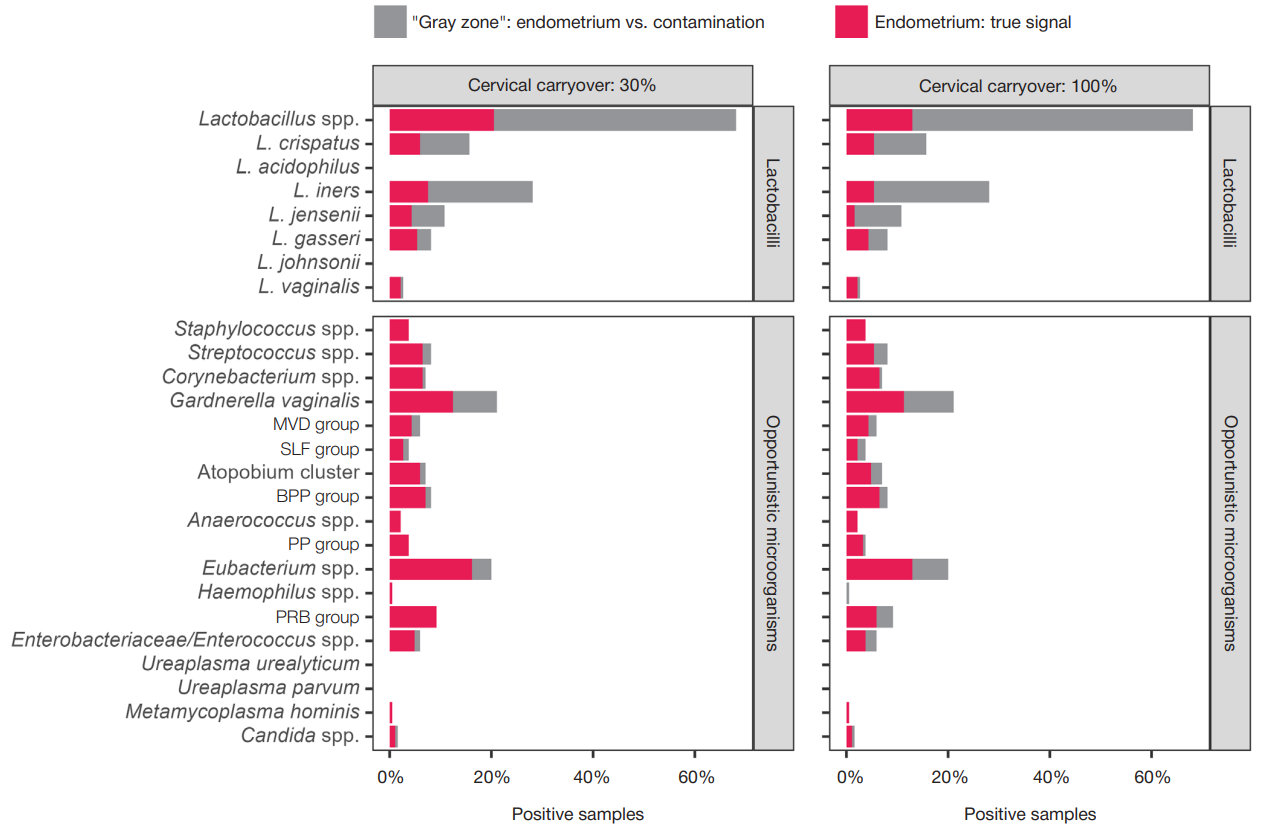
Fig. 3. Detection frequency of target microbial groups in endometrial samples after correction for 30% (left panel) and 100% (right panel) cervical DNA carryover. MVD — Megasphaera spp. / Veillonella spp. / Dialister spp.; SLF — Sneathia spp. / Leptotrichia spp. / Fusobacterium spp.; BPP — Bacteroides spp. / Porphyromonas spp. / Prevotella spp.; PP — Peptostreptococcus spp. / Parvimonas spp.; PRB — Pseudomonas aeruginosa / Ralstonia spp. / Burkholderia spp.
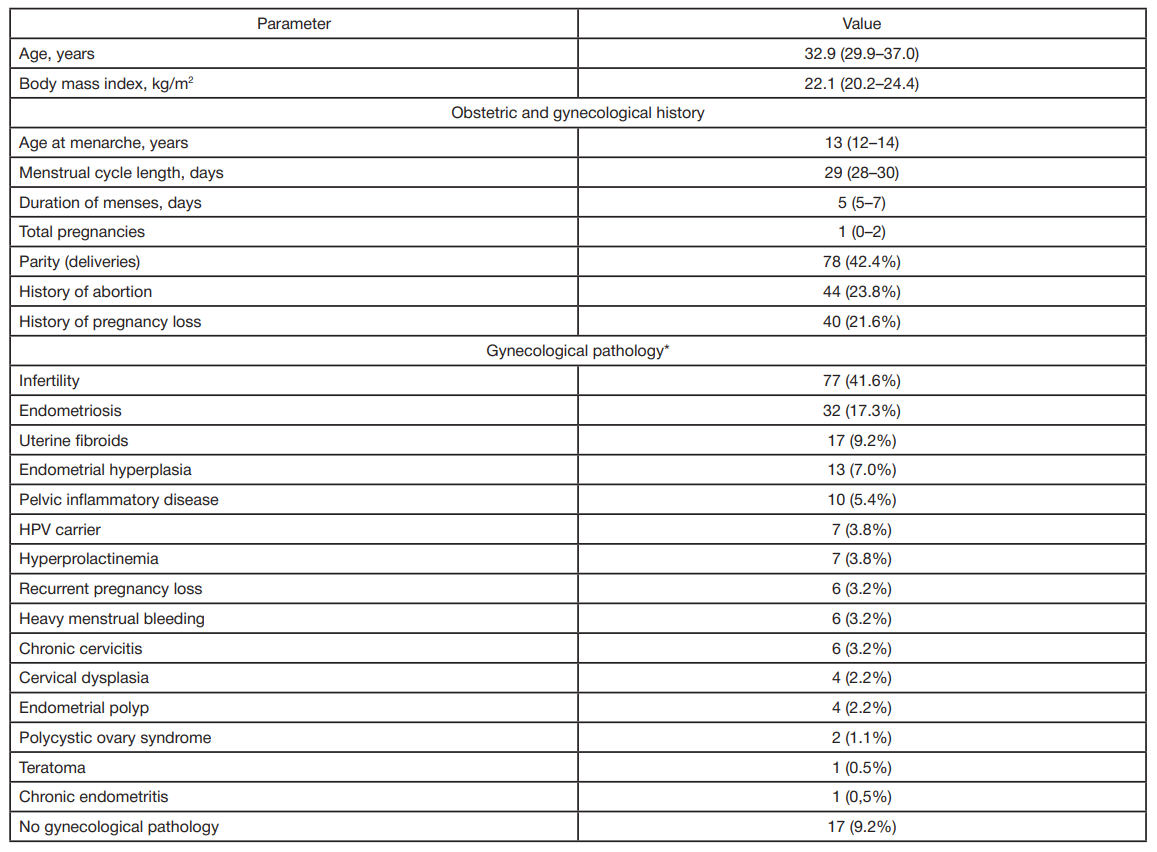
Table 1. Clinical characteristics of the patients
Note: * — the sum of obstetric-gynecologic diagnoses exceeds 100% because several patients had more than one diagnosis.
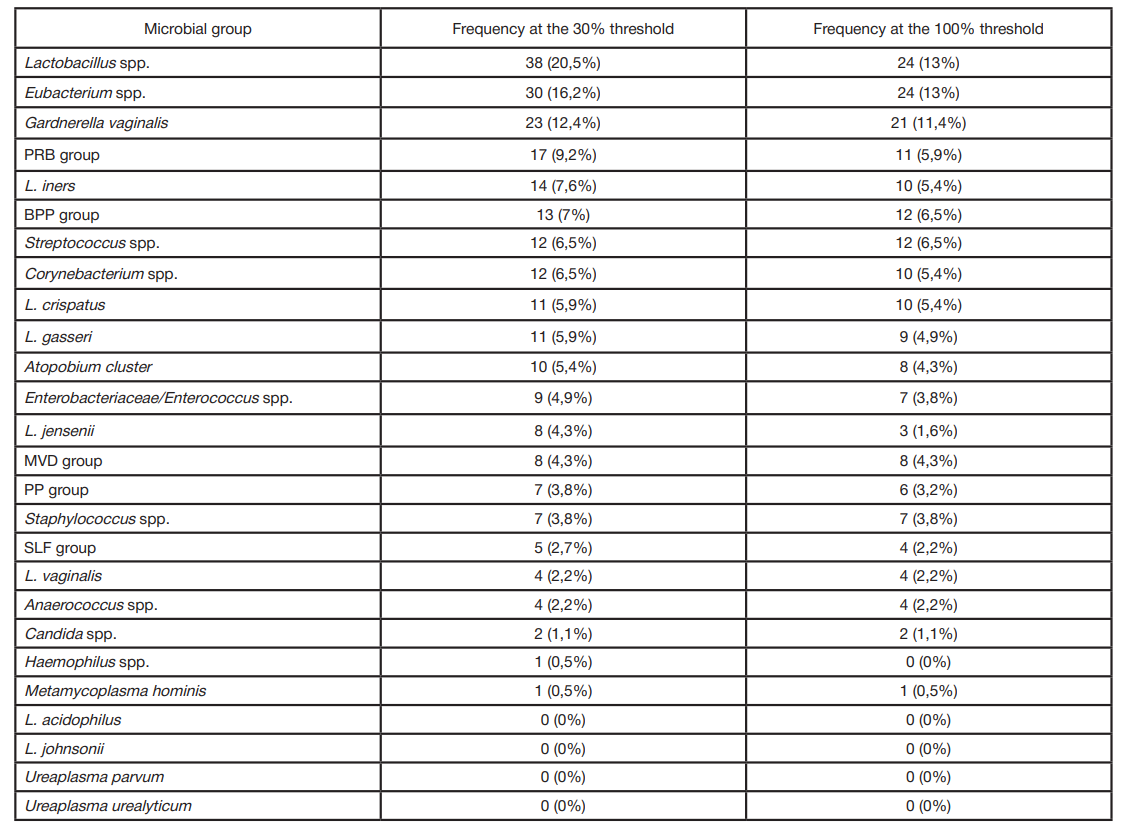
Table 2. Detection frequency of microorganisms in endometrial samples after correction for potential contamination. Microorganisms are ranked by detection frequency at the 30% threshold
Note: PRB — Pseudomonas aeruginosa / Ralstonia spp./ Burkholderia spp. BPP — Bacteroides spp. / Porphyromonas spp. / Prevotella spp.; MVD — Megasphaera spp. / Veillonella spp. / Dialister spp.; PP — Peptostreptococcus spp. / Parvimonas spp.; SLF — Sneathia spp. / Leptotrichia spp. / Fusobacterium spp.