Copyright: © 2026 by the authors. Licensee: Pirogov University.
This article is an open access article distributed under the terms and conditions of the Creative Commons Attribution license (CC BY).

ORIGINAL RESEARCH

Chronic fatigue in siblings of pediatric cancer survivors: children’s self-reports and parents’ proxy-reports

Likhomanova EN1,2 , Shevaldova OV1 , Kovaleva AV1
About authors

1 Federal Research Center for Innovator and Emerging Biomedical and Pharmaceutical Technologies, Moscow, Russia

2 Dmitry Rogachev National Medical Research Center of Pediatric Hematology, Oncology and Immunology, Moscow, Russia

Correspondence should be addressed: Elena N. Likhomanova
Baltijskaya, 8, Moscow, 125315; ur.mrahpmedaca@ne_avonamohkil

About paper

Funding: RSF grant No. 25-25-00898 “Psycho-Physiological Indicators of Healthy Siblings’ (Brothers’ and Sisters’) Adaptation in Families of Children With Cancer”.

Acknowledgments: the authors express their gratitude to А.F. Karelin for the opportunity to conduct the study at the Russkoye Pole Treatment and Rehabilitation Research Center (Dmitry Rogachev National Medical Research Center of Pediatric Hematology, Oncology and Immunology) and А.А. Devyaterikova for the expert opinion about the manuscript.

Author contribution: Likhomanova EN — conceptualization, methodology, research procedure, data processing, manuscript editing; Shevaldova OV — statistical analysis, preparation of illustrations for the article, manuscript writing; Kovaleva AV — project management, administration, manuscript editing.

Compliance with ethical standards: the study was approved by the Ethics Committee of the Anokhin Research Institute of Normal Physiology (protocol No. 18/1 dated February 15, 2023), as well as the Ethics Committee of the Dmitry Rogachev National Medical Research Center of Pediatric Hematology, Oncology and Immunology (protocol No. 8э/16-17 dated October 27, 2017). The children’s parents submitted the informed consent to take part in the study.
Received: 2026-06-03 Accepted: 2026-06-29 Published online: 2026-07-18
|
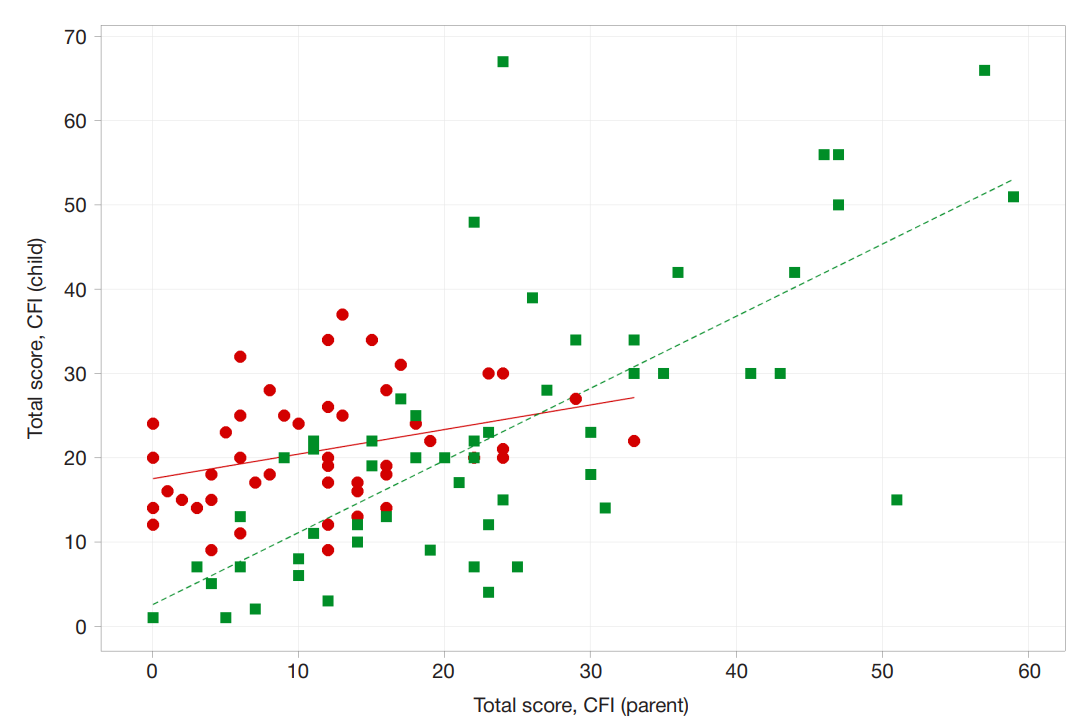
Fig. 1. Scatter charts with the linear regression lines for CFI assessment by parents and children in the control group (red) and siblings (green). X axis — parent’s estimate; Y axis — child’s estimate.
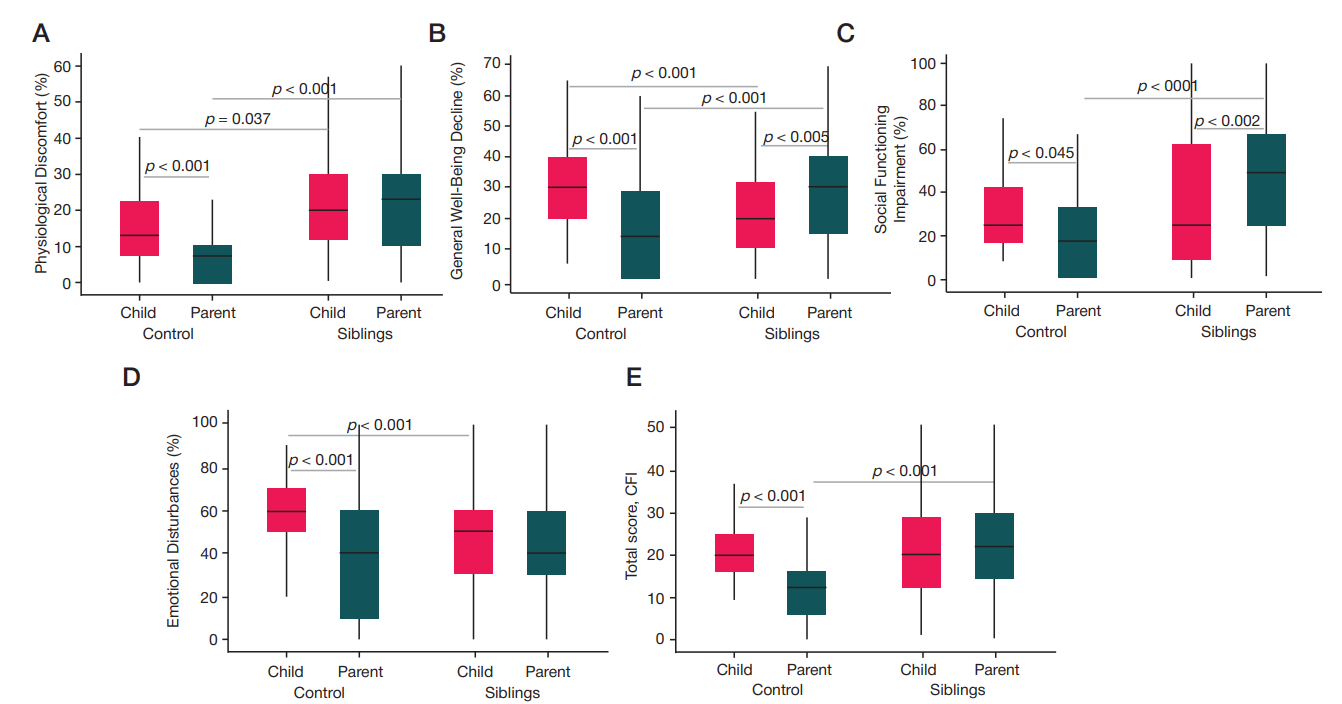
Fig. 2. Box plots of the distribution of chronic fatigue indicators by subscales in the control group and group of siblings. Red box plots — children’s estimates; green — parents’ estimates. Intragroup differences between the child’s and parent’s estimates (Wilcoxon test for related samples) and intergroup differences between the control group and group of siblings (Mann–Whitney U-test) are designated by red brackets with p-values. Only statistically significant comparisons are shown (p < 0.05). А. Physiological Discomfort Symptoms subscale. B. General Well-Being Decline and Cognitive Discomfort subscale. C. Emotional and Affective Disturbances subscale. D. Decreased Motivation and Social Communication Changes subscale. E. chronic fatigue index (CFI, total score)
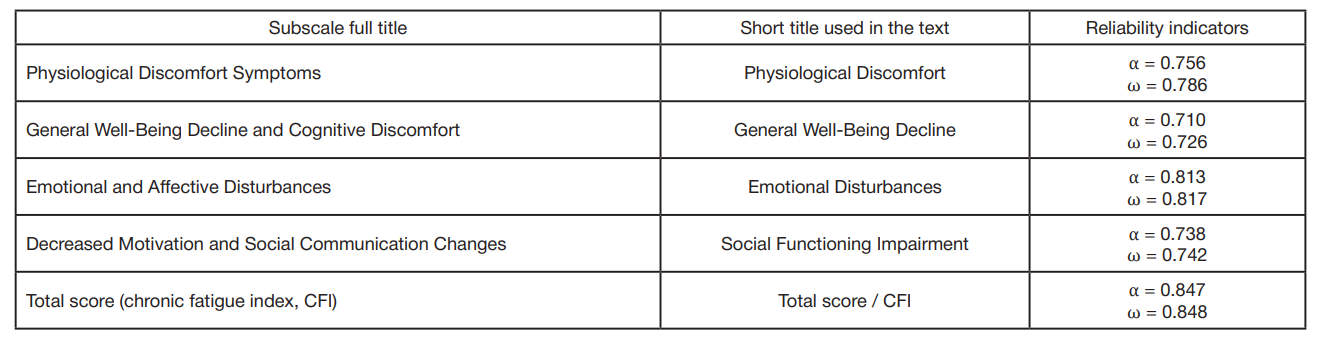
Table 1. Chronic Fatique Severity questionnaire subscale and authorized abbreviations
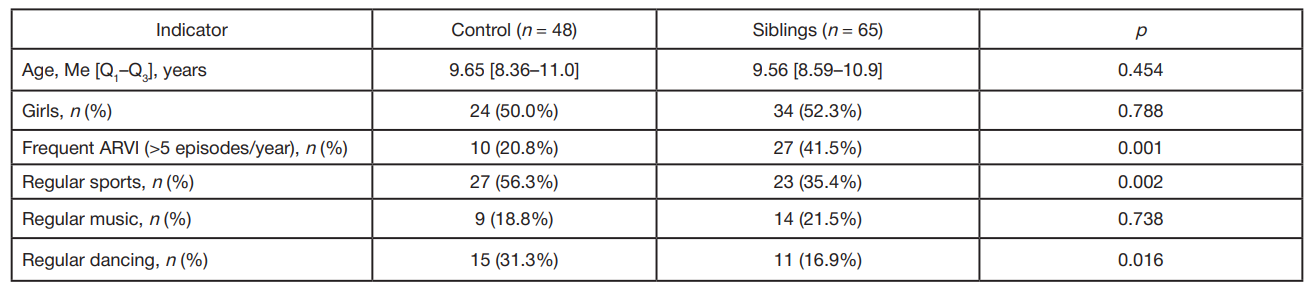
Table 2. Socio-demographic and clinical and anamnestic characteristics of the sample
Note: The data are presented as Ме [Q1–Q3] or n (%). Quantitative variables were compared using the Mann–Whitney U-test; categorical ones were compared using Pearson’s chi-squared test (χ²) or Fischer’s exact test.
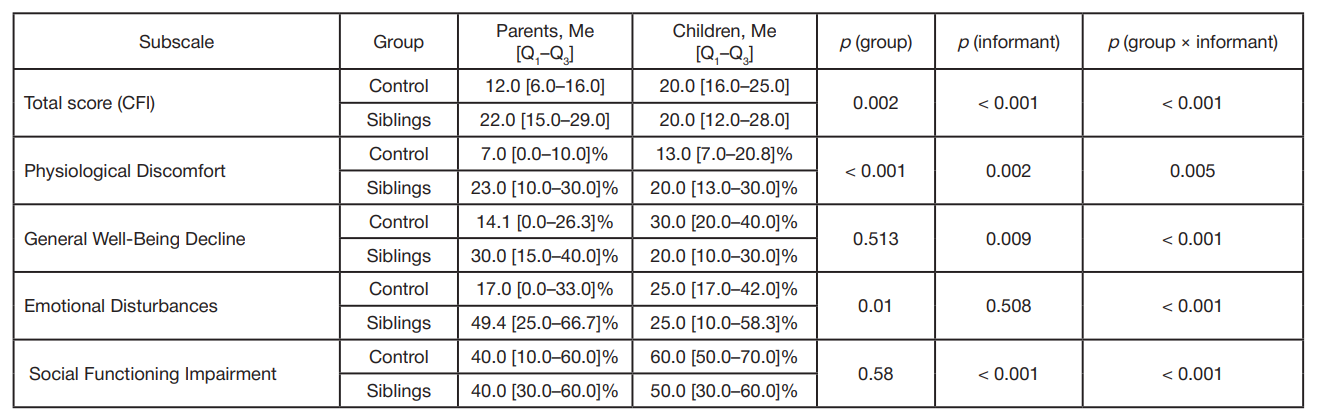
Table 3. Chronic fatigue indicators by subscales and linear mixed model results
Note: The data are presented as the median and interquartile range [Q1–Q3]; for subscales — as the percentage of the maximum score. LMM with fixed effects of the group, informant, and their interaction; random effect — dyad ID. Covariates: frequency of ARVI, engagement in sports and dancing.
Table 4. Correlation between the parents’ and children’s assessment of chronic fatigue severity (CFI) by groups
Note: Spearman’s rank correlation coefficients between the parent’s and child’s estimates within the same dyad are provided.