Copyright: © 2026 by the authors. Licensee: Pirogov University.
This article is an open access article distributed under the terms and conditions of the Creative Commons Attribution license (CC BY).

ORIGINAL RESEARCH

Linguo-semantic descriptors of painful sensations as a mirror therapy effectiveness criterion in trauma-related amputation

Petrash EA1 , Nikishina VB1 , Yunina-Pakulova NYu1 , Minaev AS1 , Melkonyan GG2 , Lytkina KA2 , Karpenko AS3
About authors

1 Pirogov Russian National Research Medical University, Moscow, Russia

2 Hospital for War Veterans No. 3 of the Moscow City Department of Health, Moscow, Russia

3 Moscow State Institute of International Relations (University) of the Ministry of Foreign Affairs of the Russian Federation, Moscow, Russia

Correspondence should be addressed: Ekaterina A. Petrash
Ostrovityanova, 1, Moscow, 117997, Russia; ur.liam@hsartep

About paper

Author contribution: equivalent.

Compliance with ethical standards: the study approved by the Ethics Committee of the Pirogov University (protocol No. 249 dated 17 March 2025) was compliant with the requirements of the Fundamentals of Legislation "On the Protection of Citizens' Health”; all subjects submitted the informed consent for assessment.
Received: 2026-01-29 Accepted: 2026-02-19 Published online: 2026-02-26
|
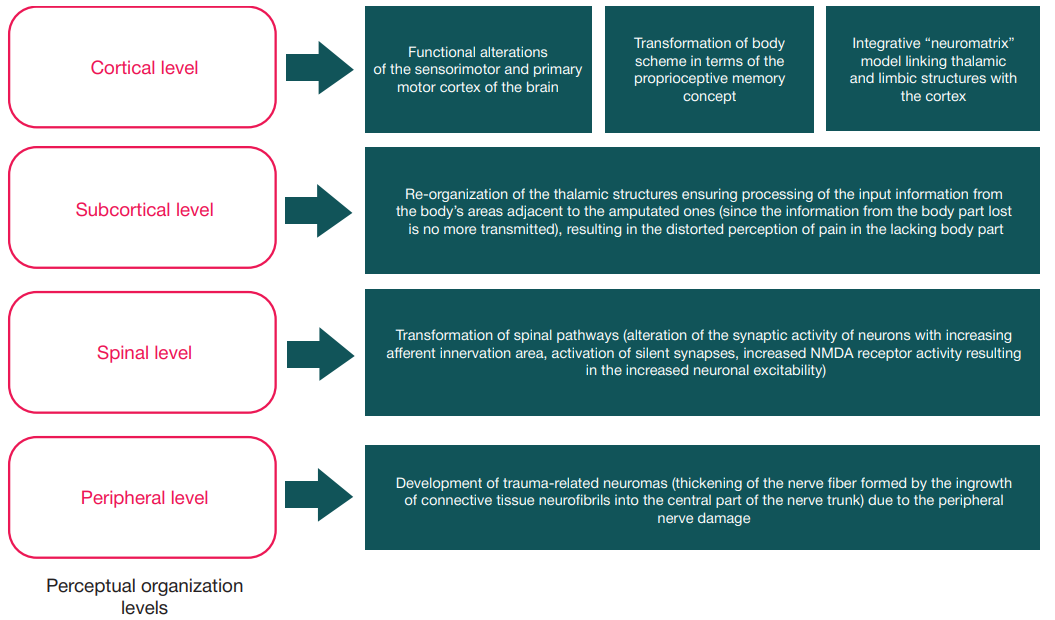
Fig. 1. Scheme hierarchical organization of the mechanisms underlying the emergence of phantom pain
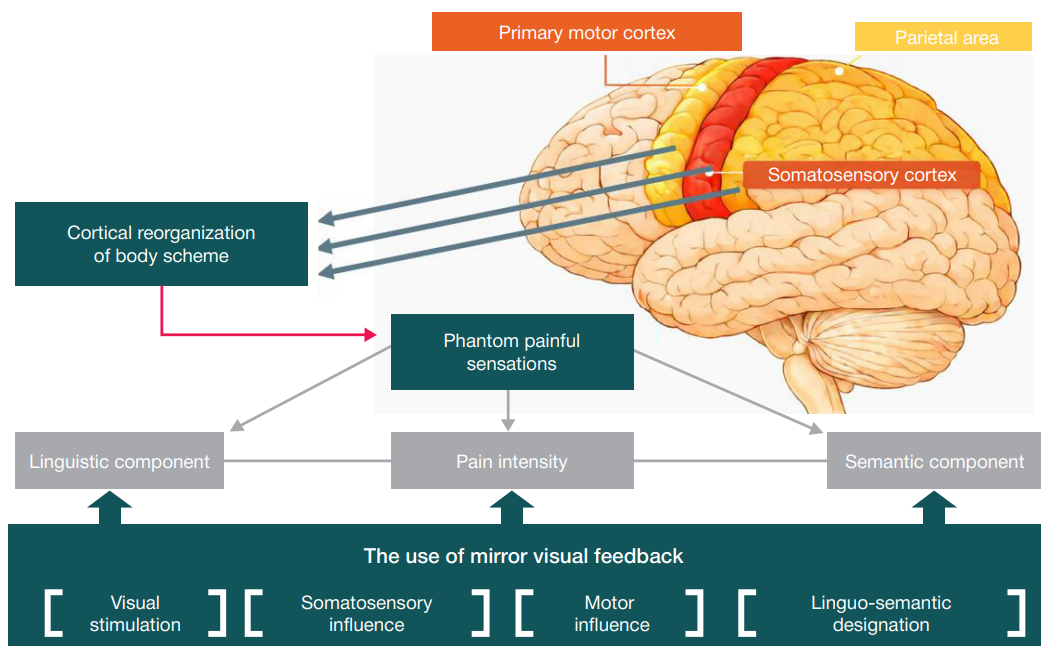
Fig. 2. Scheme of the conceptual model of the dynamic changes in linguistic and semantic descriptors of painful sensations in patients with trauma-related amputation of the limb showing manifestations of phantom pain syndrome during therapy involving the use of mirror visual feedback
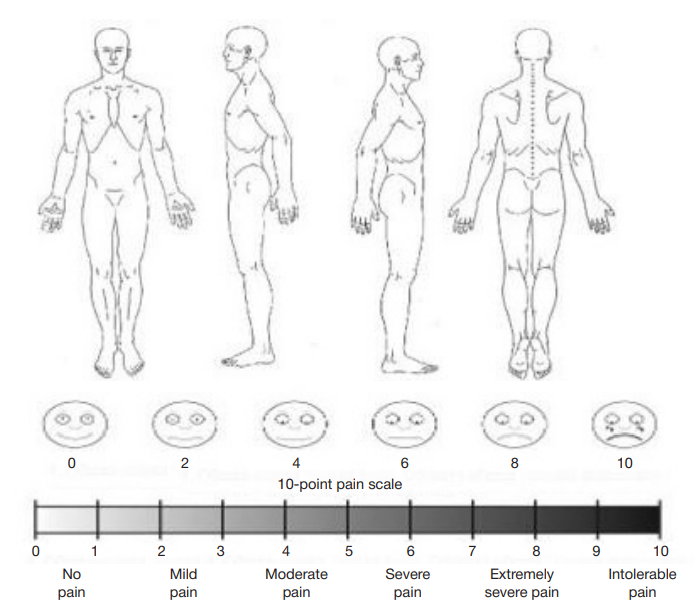
Fig. 3. Example form in the phase of psychological diagnosis of linguo-semantic descriptors of pain in patients with trauma-related amputation showing manifestations of phantom pain syndrome
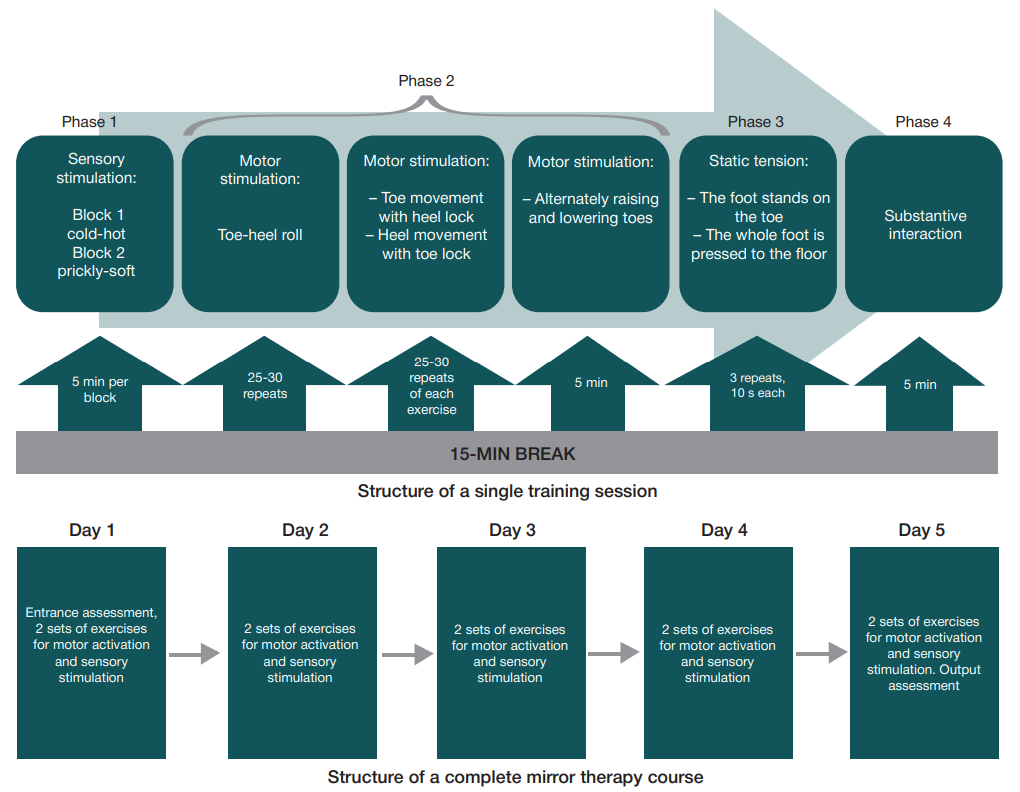
Fig. 4. Algorithm to conduct the psychological correction procedure involving the use of the FaBo mirror in patients with trauma-related amputation of lower limbs
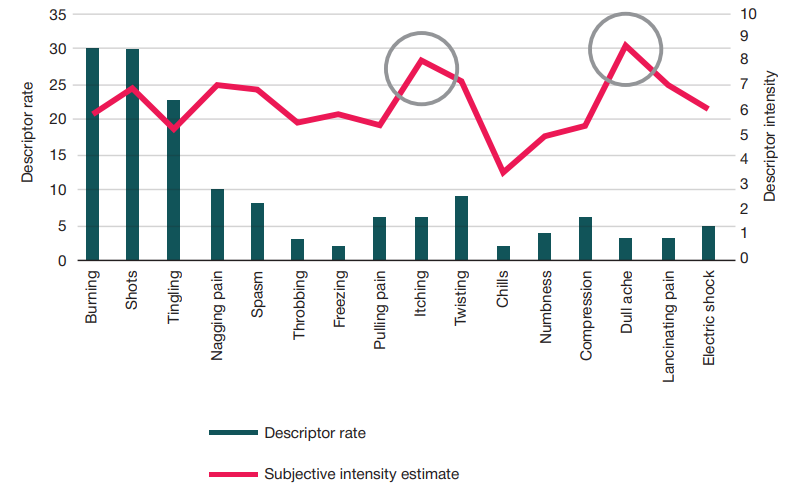
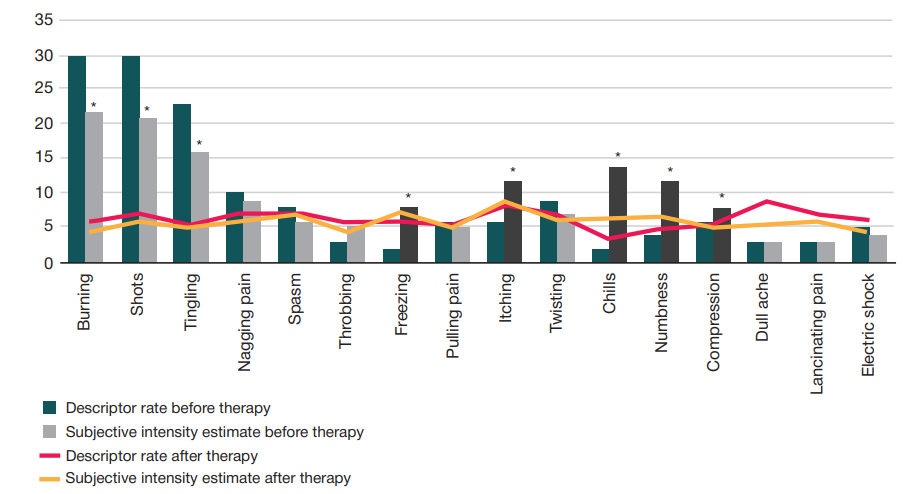
Fig. 5. Relationship between the rates of selecting the descriptors to describe phantom painful sensations and the subjective estimates of their intensity in patients
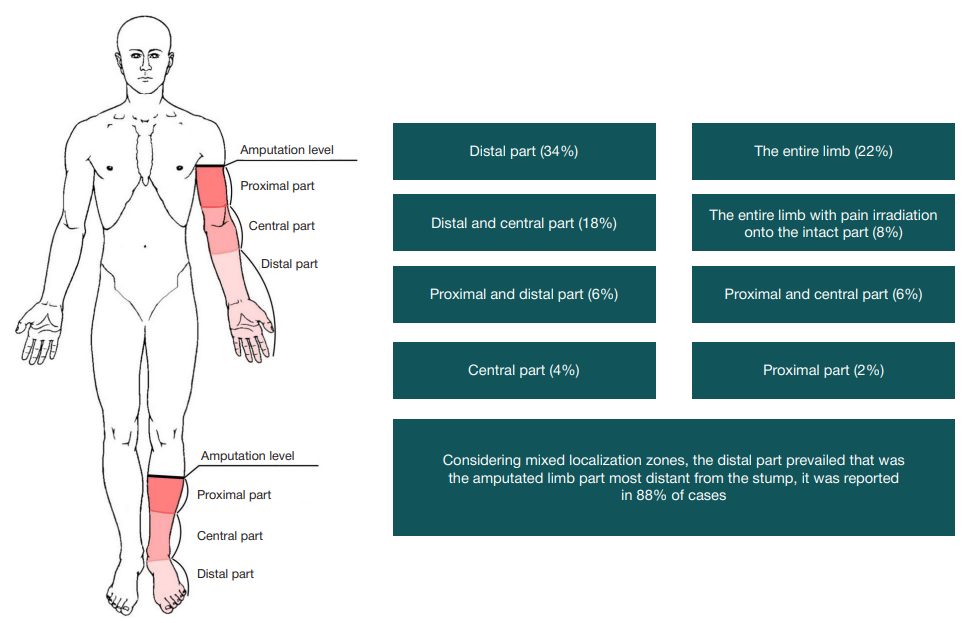
Fig. 6. Scheme of phantom painful sensation localization in patients with trauma-related amputation of lower limbs
Fig. 7. Relationship between the phantom pain descriptor rates and manifestation intensity in patients before and after the training course involving the use of the FaBo mirror