Copyright: © 2026 by the authors. Licensee: Pirogov University.
This article is an open access article distributed under the terms and conditions of the Creative Commons Attribution license (CC BY).

ORIGINAL RESEARCH

Postmenopausal change in MSCs sensitivity to testosterone, 17β-estradiol, and PTH are associated with impaired adipogenesis

Zinoveva AA , Bakhchinian E , Kamenkov SS , Shcherbakova LN , Bugerenko AE , Ogay DS , Voloshin NS , Chechekhina ES , Kulebyakin KYu
About authors

Lomonosov Moscow State University, Moscow, Russia

Correspondence should be addressed: Elizaveta S. Chechekhina
Lomonosovsky Prospect 27/1, Moscow, 119192, Russia; ur.usm.ym@seavonyov

About paper

Funding: the study was supported by the RSF grant 25-75-30005 “Regulation of Body’s Cell Renewal Processes, the Fundamentals for Long-term Maintenance of Functional Activity of Organs and Tissues, Human Health and Active Longevity”.

Author contribution: Zinoveva AA, Bakhchinian E — experiments on MSC differentiation, processing of the results; Kamenkov SS — MSC isolation and culturing, statistical data processing, manuscript writing; Shcherbakova LN — clinical phase management, biomaterial acquisition, interpretation of the results, manuscript editing; Bugerenko AE, Ogay DS — clinical phase management, biomaterial acquisition; Voloshin NS — adipogenic differentiation quantification; Chechekhina ES — study concept and design, MSC isolation and culturing, interpretation of the results, manuscript writing; Kulebyakin KYu — study concept and design, interpretation of the results, manuscript editing.

Compliance with ethical standards: the study was approved by the Ethics Committee of the Lomonosov Moscow State University (IRB00010587, protocol No. 4 dated 4 June 2018, protocol No. 9 dated 29 October 2018) was conducted in accordance with the principles of the Declaration of Helsinki. All the patients provided informed consent before biomaterial collection.
Received: 2026-03-09 Accepted: 2026-04-05 Published online: 2026-04-16
|
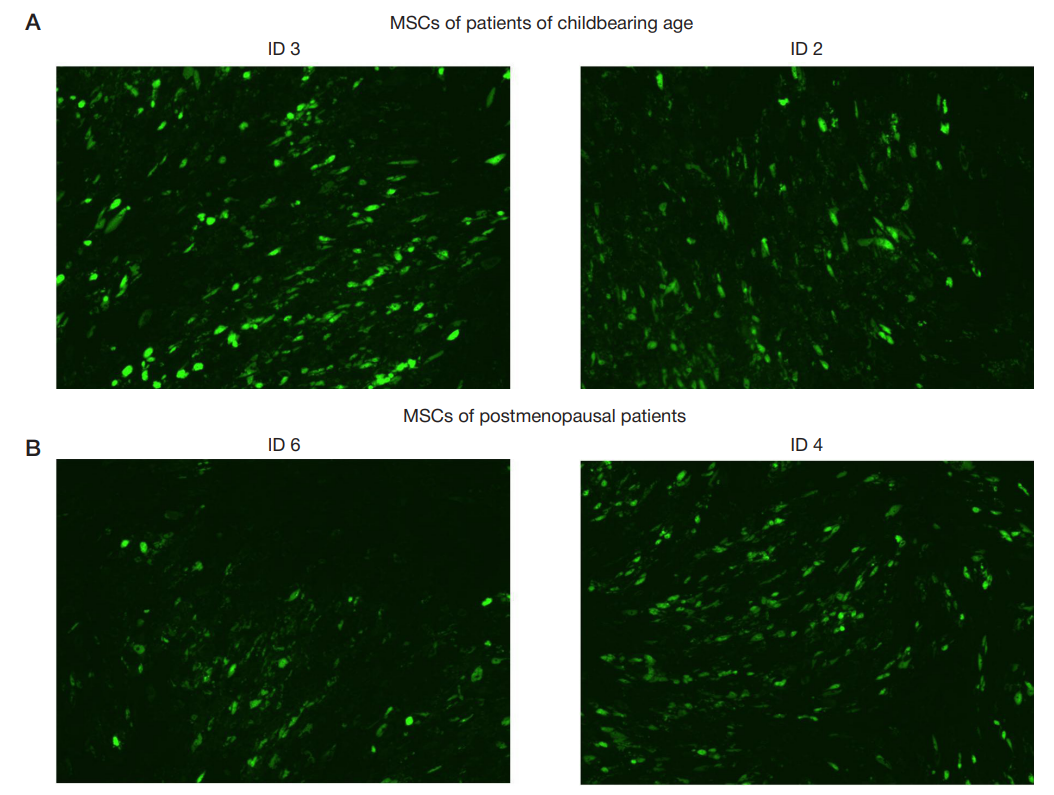
Fig. 1. Adipogenic differentiation of the MSCs obtained from patients of childbearing age and postmenopausal patients in the control differentiation medium. A. Images of the MSCs obtained from patients of childbearing age at the differentiation endpoint (day 14) with the Nile Red stained lipid droplets. B. Images of the MSCs obtained from postmenopausal patients at the differentiation endpoint (day 14) with the Nile Red stained lipid droplets
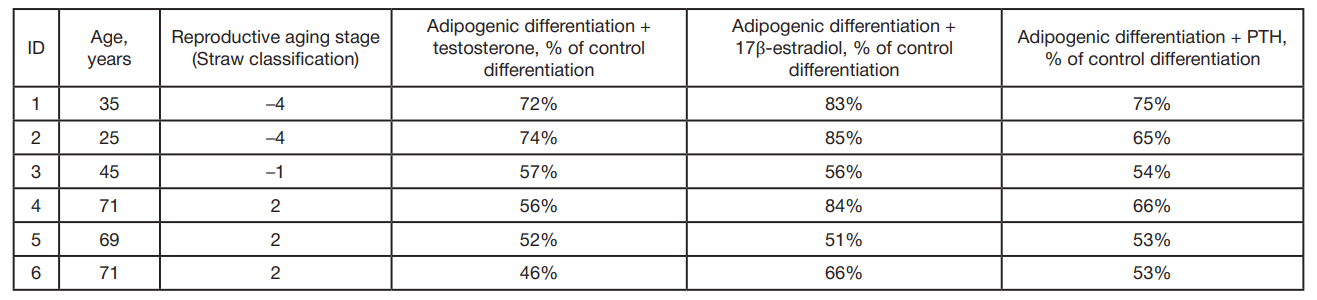
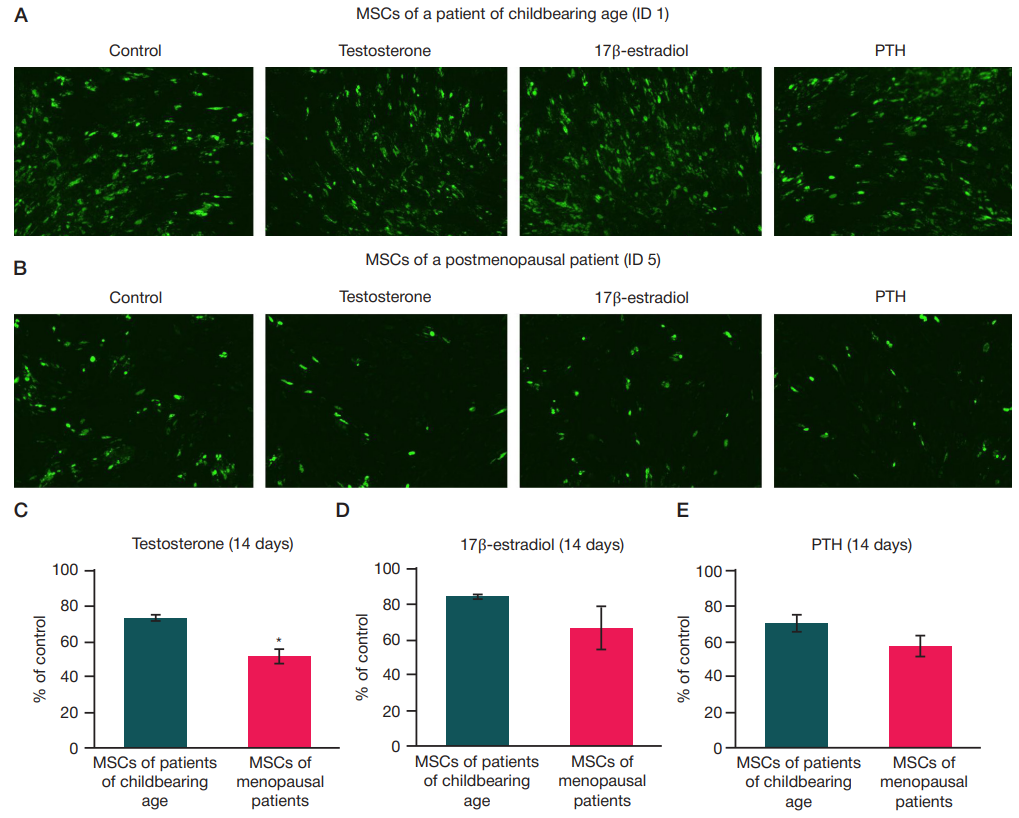
Fig. 2. Adipogenic differentiation of the MSCs obtained from patients of childbearing age and postmenopausal patients in the control differentiation medium, as well as in the differentiation medium supplemented with testosterone, 17β-estradiol, and PTH. A. Images of the MSCs obtained from patients of childbearing age at the differentiation endpoint (day 14) with the Nile Red stained lipid droplets. B. Images of the MSCs obtained from postmenopausal patients at the differentiation endpoint (day 14) with the Nile Red stained lipid droplets. C–E. Results of quantification of adipogenic differentiation in the presene of testosterone (C), 17β-estradiol (D), and PTH (E) normalized to the control differentiation conditions (n = 2,3; * — p < 0.05; t-test).
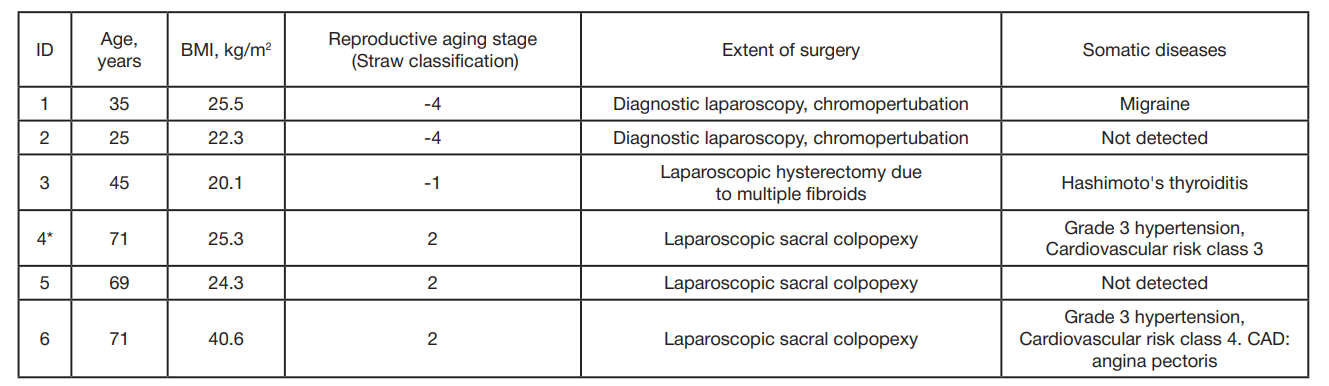
Table 1. Clinical characteristics of patients
Note: * — the patient had a history of using topical estrogens.
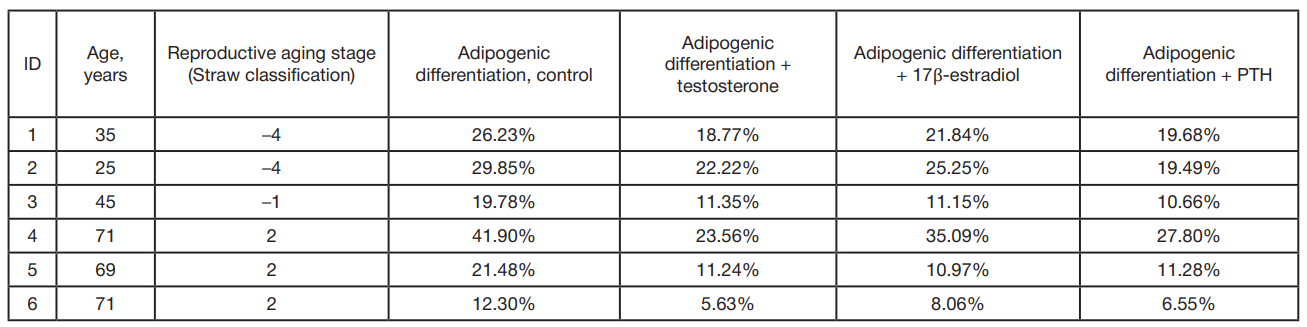
Table 2. Absolute adipogenic differentiation efficiency values (proportion of cells with lipid droplets) in patients of various age groups
Table 3. Changes in adipogenic differentiation efficiency depending on testosterone, 17β-estradiol, and PTH supplementation in patients of various age groups