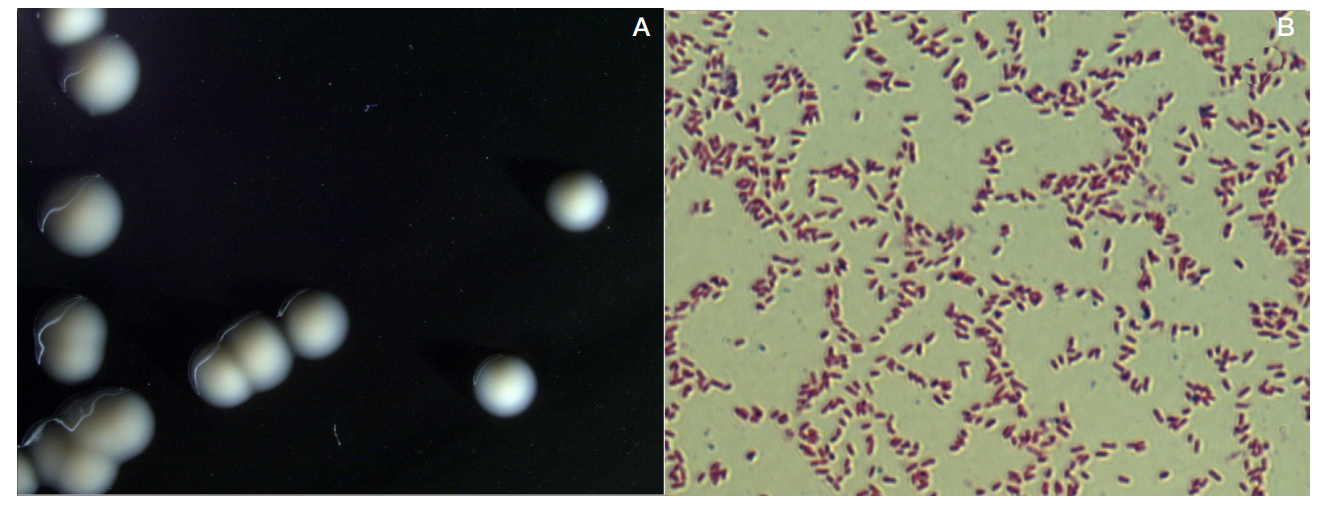
Fig. 1. Cultural, morphological, and staining characteristics of B. bronchiseptica. A. Appearance of B. bronchiseptica colonies on Bordetelagar medium after 24 hours of incubation (Carl Zeiss Discovery stereoscopic microscope. V12. Magnification 20×). B. Gram staining (EC Plan-NEOFLUAR 100 × 1.3 lens; PI 10 × 23 Br ocular lens (Carl Zeiss, Germany))
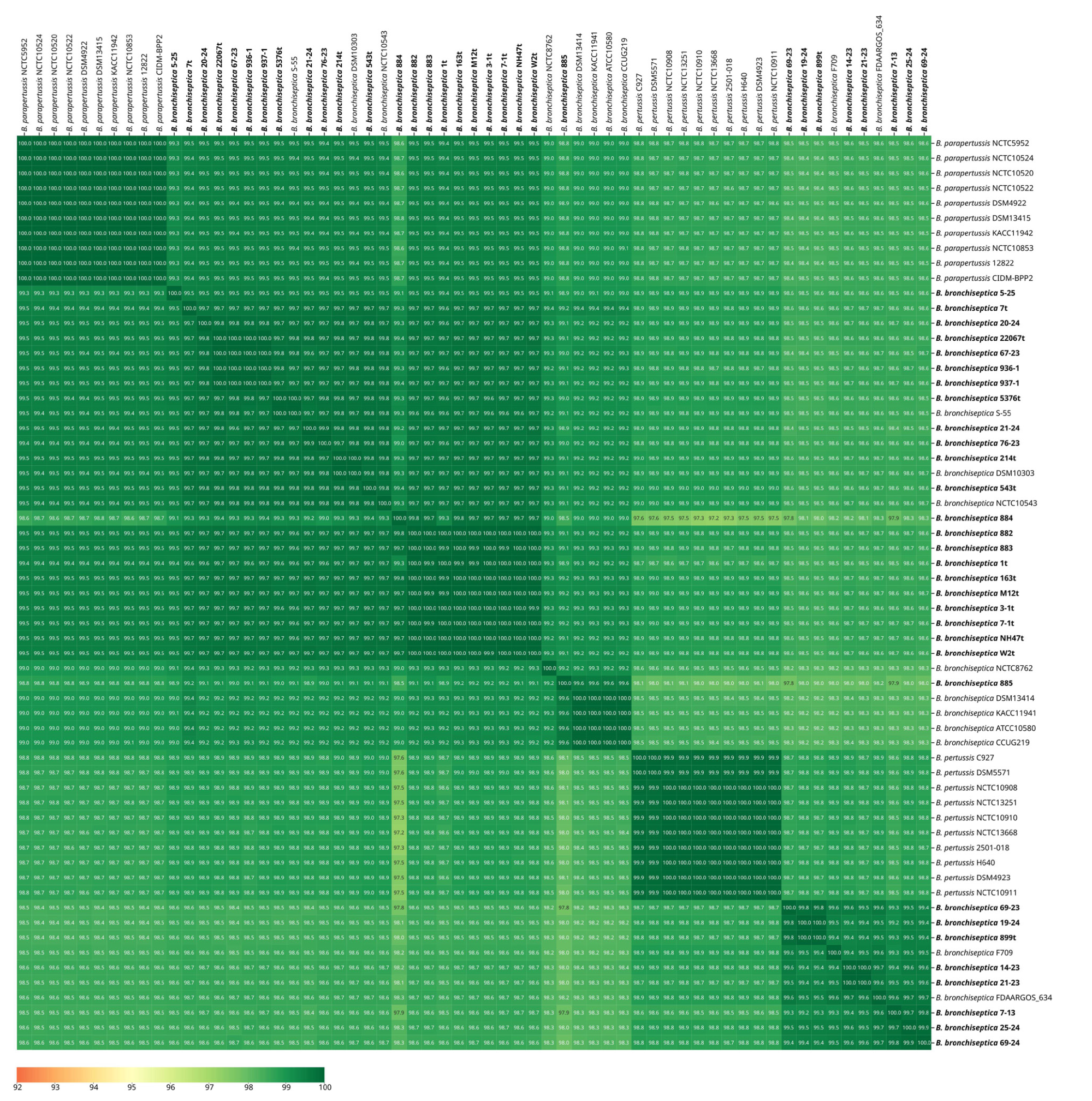
Fig. 2. Clustered heat map of ANI among 61 bacterial genomes, including 31 B. bronchiseptica collection isolates and 30 reference strains of B. bronchiseptica, B. parapertussis, and B. pertussis retrieved from the NCBI database. The 31 studied isolates are highlighted in bold
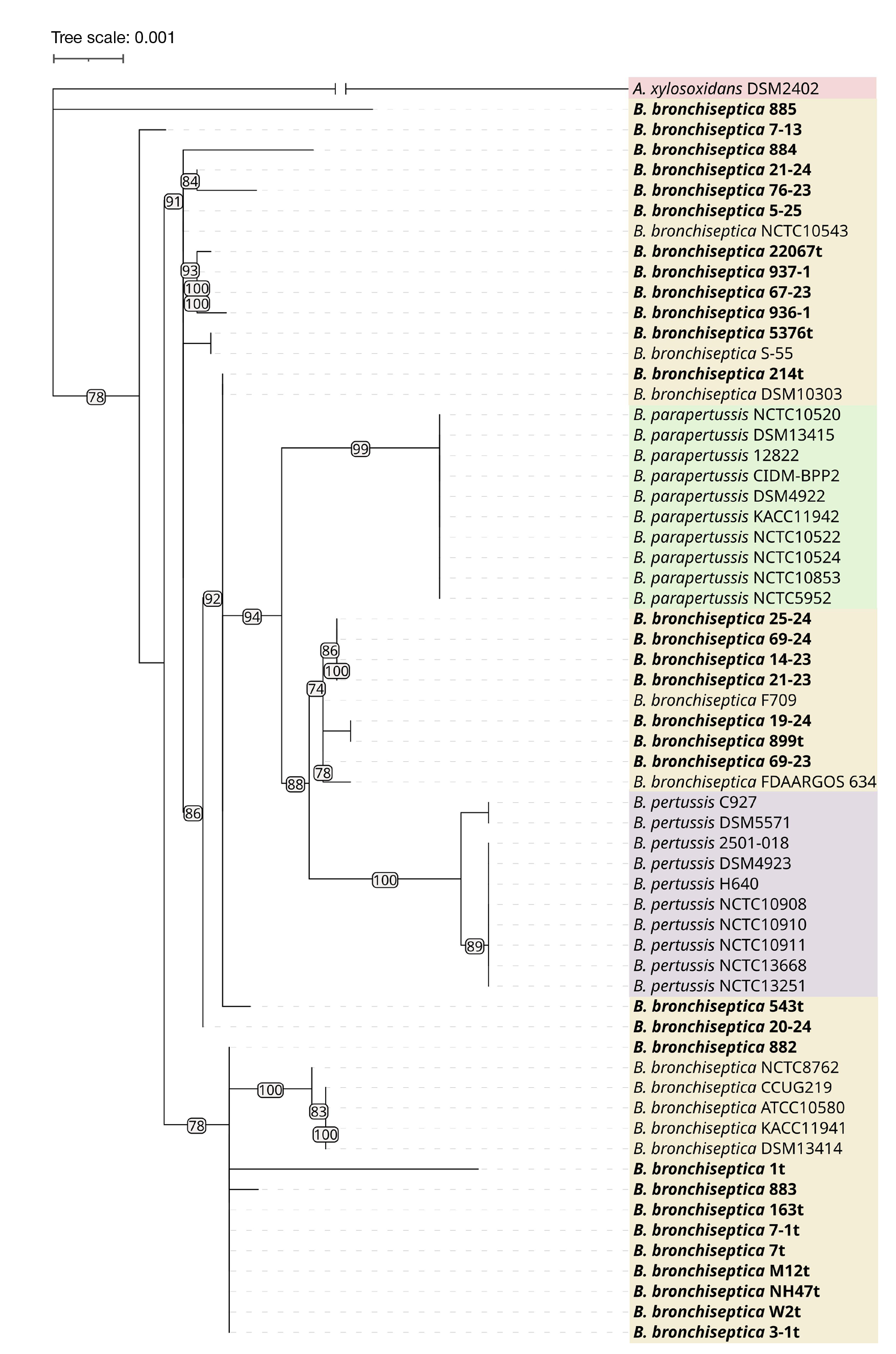
Fig. 3. Phylogenetic tree of the genus Bordetella constructed using the maximum-likelihood method based on a GTDB alignment of conserved BAC120 protein markers. The Achromobacter xylosoxidans DSM 2402 genome was used as the outgroup to root the tree. The 31 studied isolates are highlighted in bold
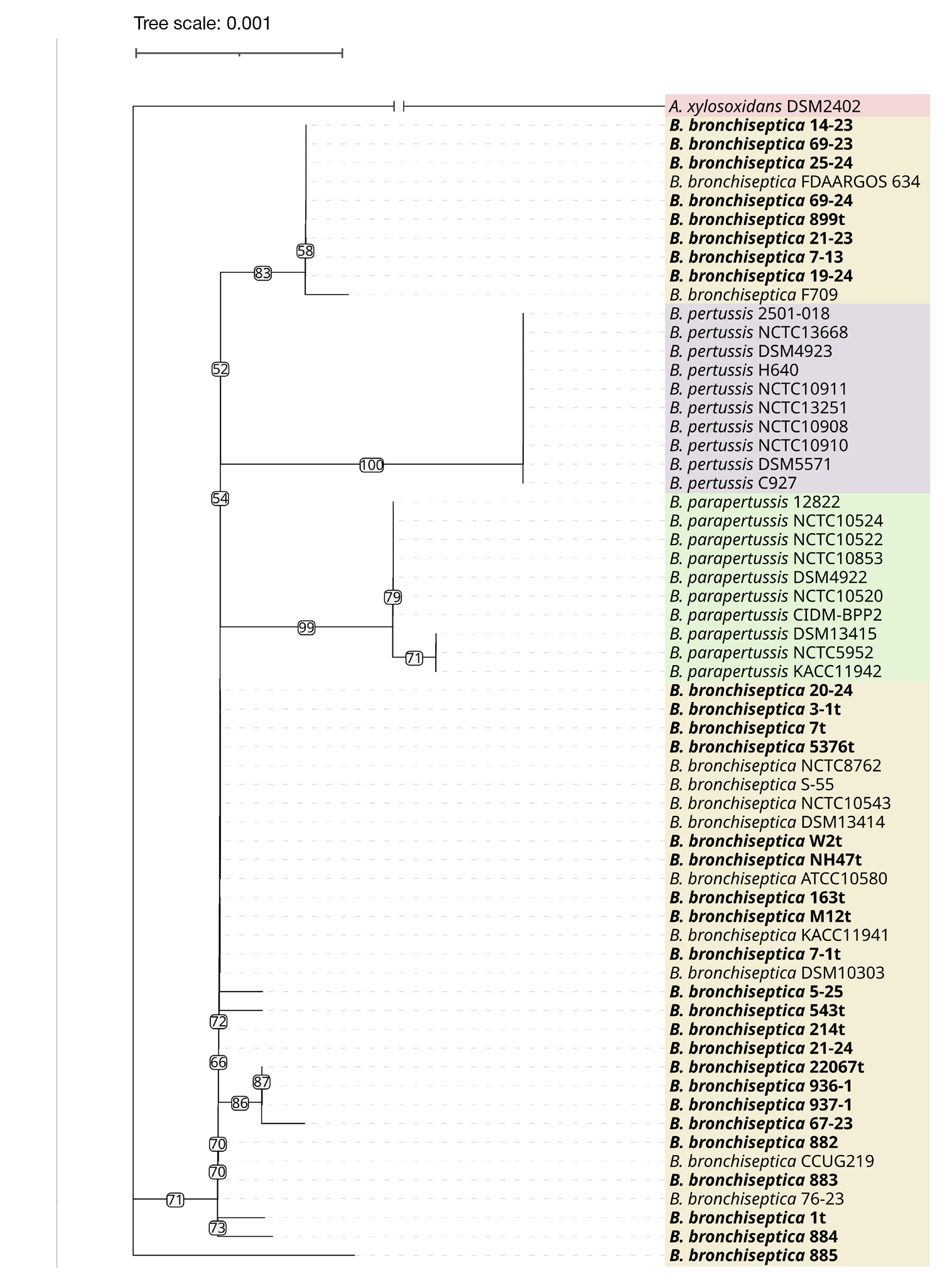
Fig. 4. Maximum-likelihood phylogenetic tree of Bordetella based on a concatenated alignment of ribosomal protein sequences. The genome of Achromobacter xylosoxidans DSM 2402 was used as the outgroup to root the tree. The 31 studied isolates are highlighted in bold
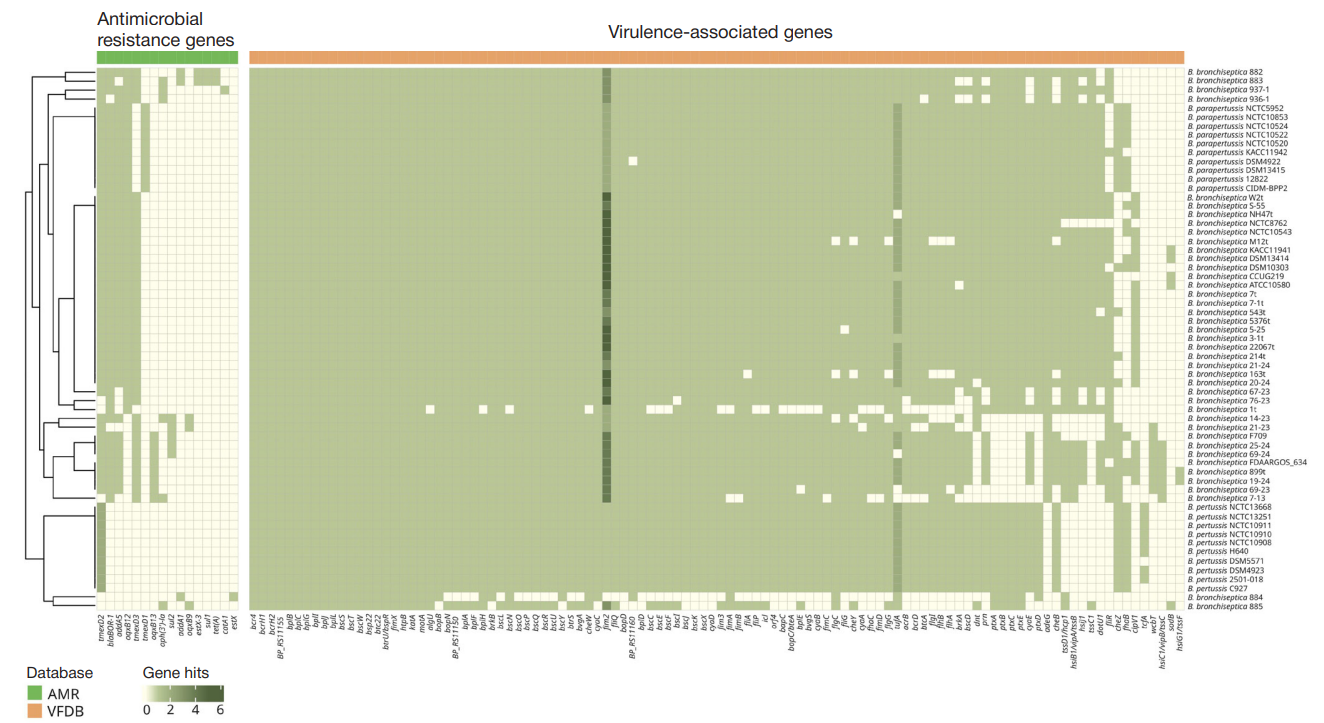
Fig. 5. Heat map showing the distribution of antibiotic resistance genes and virulence factors across the studied genomes. Rows represent genomes, and columns represent the identified genes. Color intensity indicates the number of individual matches detected by ABRicate for each gene in each genome
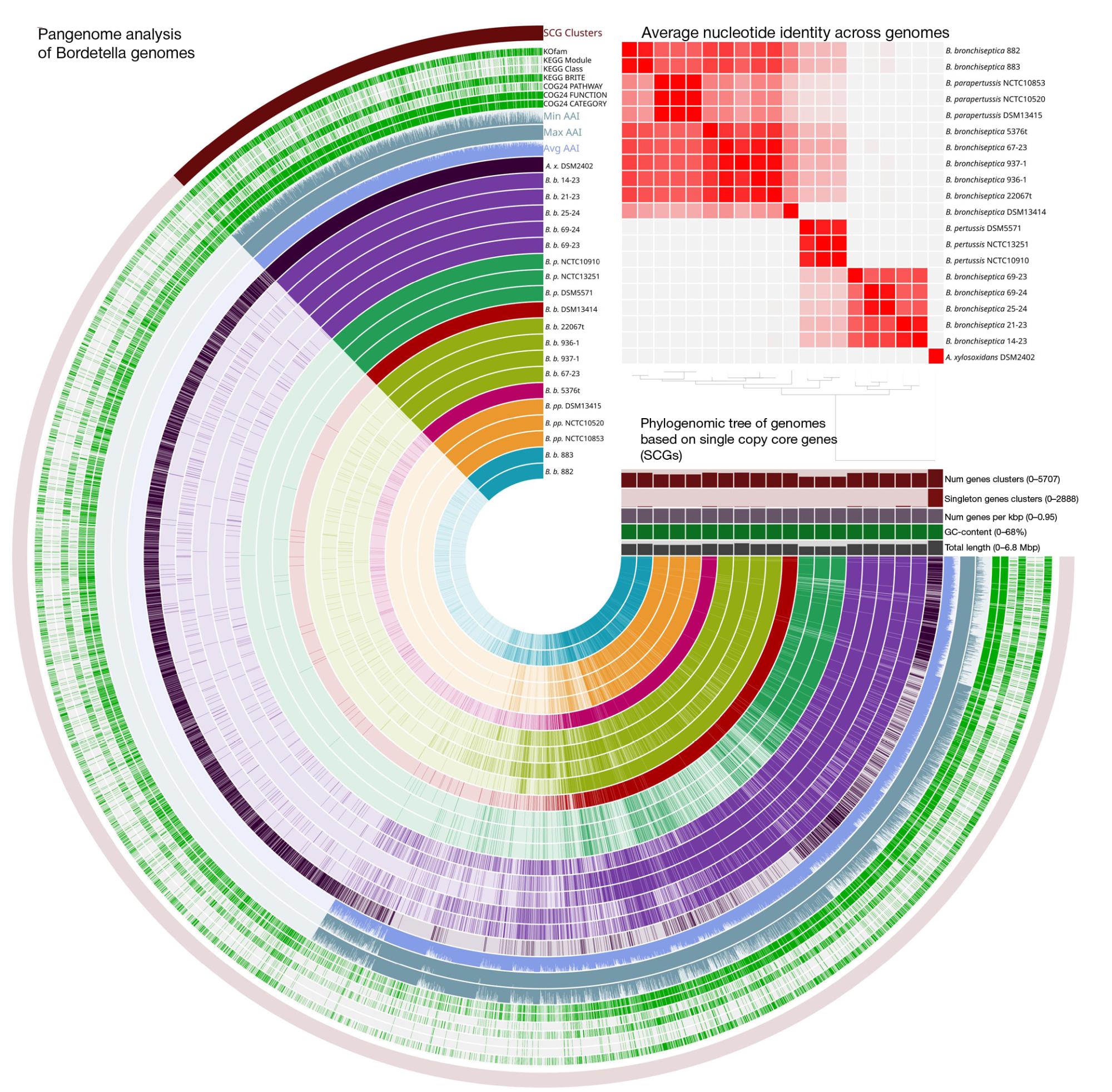
Fig. 6. Pangenomic analysis of 20 genomes: 19 genomes representing classical Bordetella species and the genome of Achromobacter xylosoxidans DSM 2402, which was used as an outgroup for rooting the phylogenetic tree. The genomes are arranged according to the phylogeny of single-copy core genes, shown in the external dendrogram. The concentric radial layers represent individual genomes; they are aligned with the general catalog of gene clusters. Saturated shaded areas indicate presence of the respective cluster in the genome. The external annotation rings show the properties of the gene clusters, including the mean, maximum, and minimum amino acid identity (AAI); the COG24 functional category, function, and metabolic pathway; the KEGG BRITE, KEGG Class, KEGG Module, and KOfam annotations; the cluster's belonging to a single-copy core gene set; the number of genes in each cluster; the number of genomes containing each cluster; and the total sequence length. Additional numerical layers indicate the total genome length, GC content, completeness, number of singleton gene clusters, total number of gene clusters, and total number of genes. The phylogenetic tree was constructed from concatenated sequences of single-copy core genes
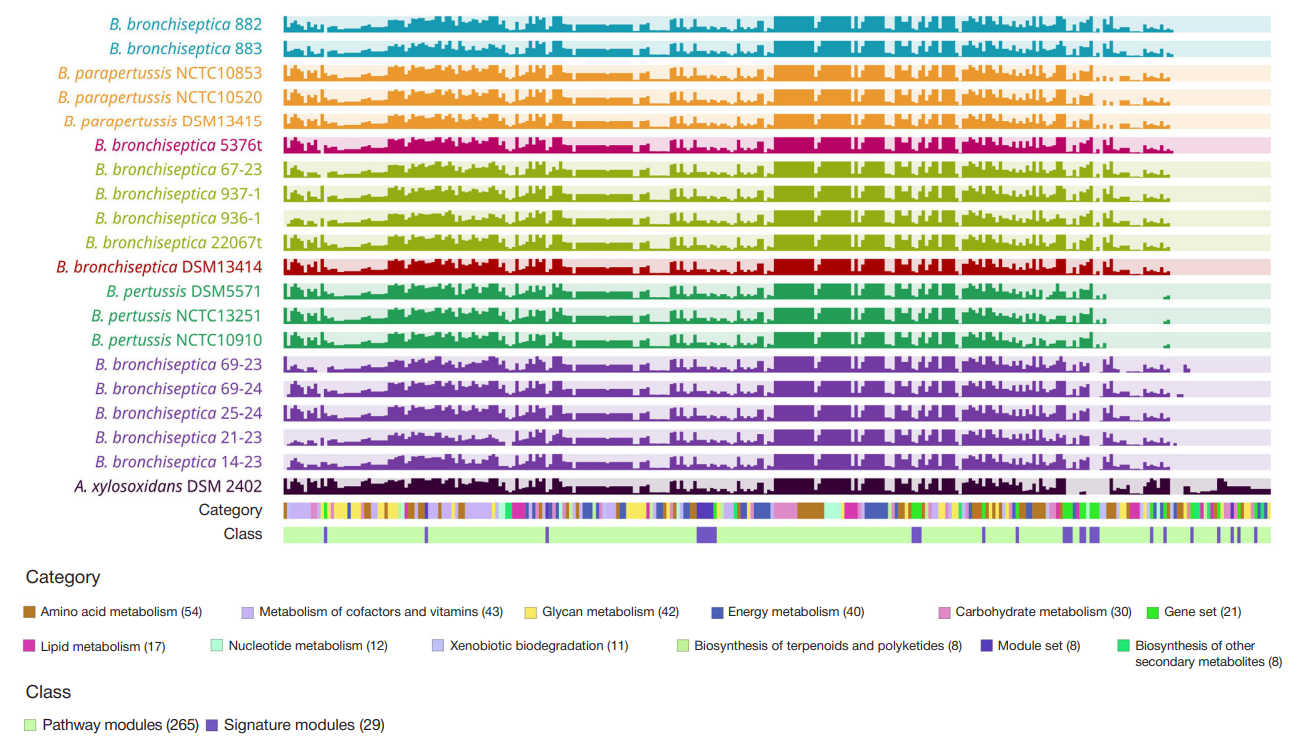
Fig. 7. Comparative analysis of the metabolic modules of classical Bordetella species. The analysis included 20 genomes: 19 classical Bordetella, and the Achromobacter xylosoxidans DSM2402 genome, which was also used as an outgroup for rooting of the phylogenetic tree. The genomes are arranged according to their position on a tree based on single-copy marker genes. The rows present genomes, the columns group KEGG paths/modules into main categories. For each pathway, a colored stripe indicates the percentage of completeness (the height of the stripe); lighter shades mark incomplete or missing modules, and the colors in the lower "category" stripe indicate the KEGG category according to the legend. The modules highlighted in purple vary in completeness among the types